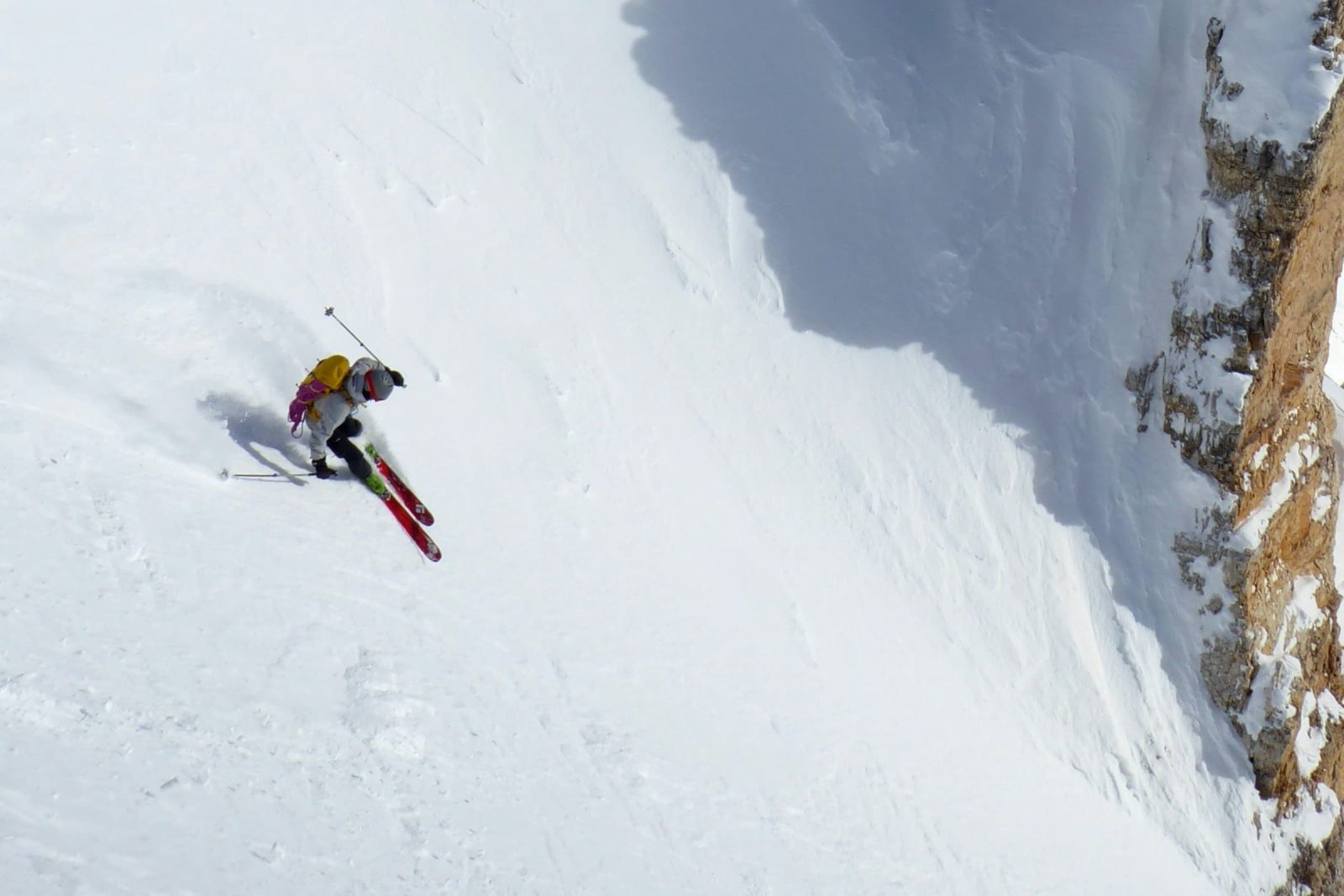
Freeride skiing is a high-adrenaline off-piste skiing discipline that sees expert skiers ride challenging lines on steep, unmarked terrain. Unlike traditional alpine skiing, which follows a pisted course, freeride skiers navigate untouched mountain terrain and use natural features such as cliffs, chutes and powder fields to showcase their skill and creativity.
The sport has grown in popularity rapidly in recent years, thanks in part to the success of the Freeride World Tour. It is now set to make its Olympic debut at the 2030 French Alps Winter Games, alongside freeride snowboarding, marking a major milestone for the sport.
In this guide, you’ll discover everything you need to know about freeride skiing, including its history, how competitions are scored, the equipment required and the top athletes that have shaped the sport.
What is Freeride Skiing?
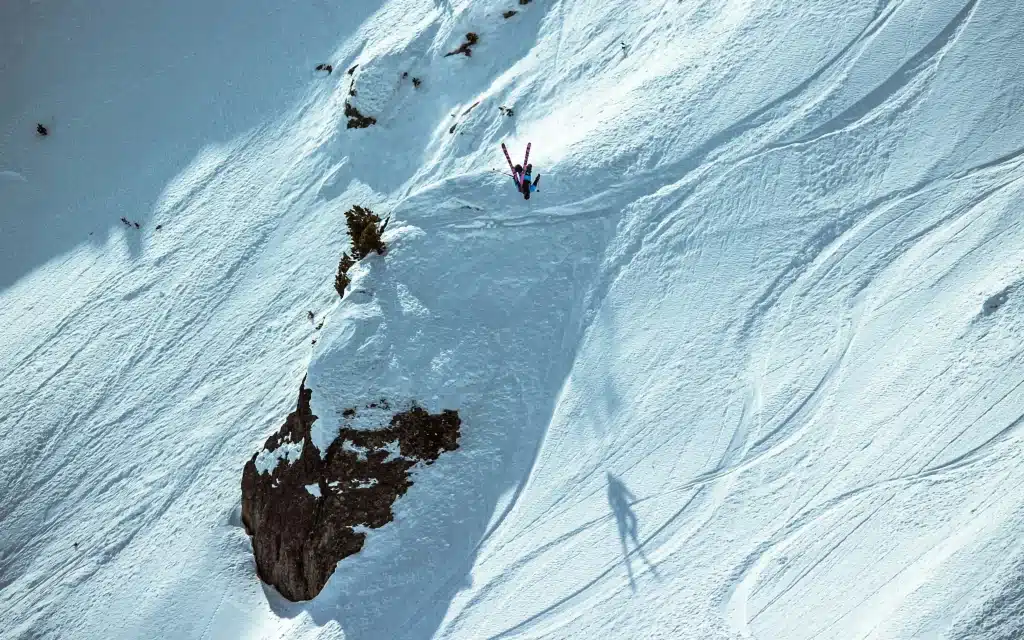
Freeride skiing, or freeriding, is an extreme alpine sport that involves skiing down untouched, unmarked terrain. It requires a combination of technical skills, expert mountain knowledge and creativity. In freeriding, riders create their own line and throw impressive tricks along the way, navigating deep snow, steep angles and natural features.
In freeride skiing competitions, skiers are scored on line choice, control, fluidity, technique, air and style and the highest-scoring run wins. It’s an adventurous, unpredictable sport, vastly different to the more regimented alpine ski disciplines that came before.
How is Freeride Skiing different to Off-Piste and Freestyle Skiing?
Freeride skiing combines elements of both freestyle skiing and off-piste skiing, but remains its own unique discipline. Like freestyle skiing, creativity and aerial tricks are a large part of freeride skiing. However, while freestyle skiing uses man-made snow features, freeriding is all-natural.
While people often use freeride skiing and off-piste skiing interchangeably, freeride skiing is a specific style of extreme off-piste skiing that focuses on navigating untouched mountain terrain, choosing your own line and using natural features such as cliffs, chutes and rock drops to showcase technical skill, control and creativity.
How is Freeride Skiing Scored?
Freeride skiing is scored on a 0-100-point scale based on an overall impression of a run, rather than a strict point checklist. This allows athletes to showcase their individual strengths while rewarding difficulty, creativity and execution, meaning any rider could win, no matter where their strengths lie. Judges evaluate each skier’s performance using five key criteria:
- Line choice – difficulty and originality
- Control – maintaining composure throughout the run
- Fluidity – smooth skiing with minimal hesitation
- Technique – skiing ability and execution
- Air & style – quality of jumps, tricks and landings
What Equipment Do You Need for Freeride Skiing?
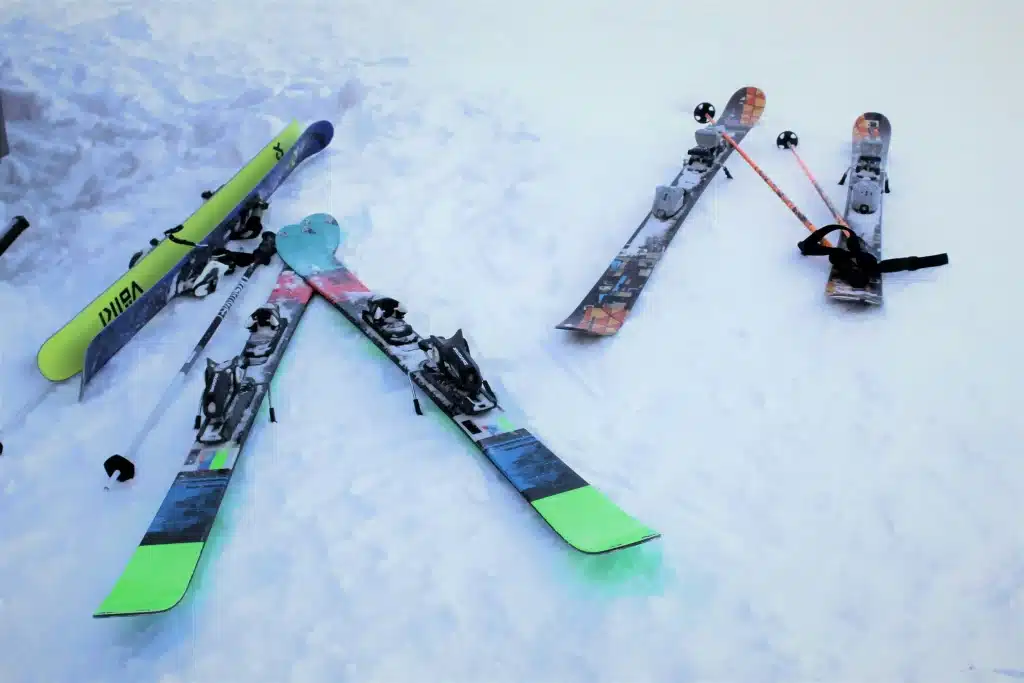
Freeride skiing requires specialised gear designed for navigating deep snow and unmarked terrain.
Freeride Skis:
Freeride skis are wider than regular alpine skis, typically 100mm+ at the waist, to provide better flotation and stability in deep powder. They also feature a more pronounced rocker at the tip and tail for better manoeuvrability.
Robust bindings with a high DIN range (release value) are required for freeride skiing, and freeride ski poles are longer and sturdier than regular poles to help skiers navigate challenging, varied terrain.
Mountain Safety Equipment:
Mountain and avalanche safety equipment is also essential for freeride skiing.
Safety equipment required includes:
- Beacon/Transceiver
- Shovel
- Probe
- Airbag
- Medical kit
- Helmet
The History of Freeride Skiing: From Extreme Skiing to the Olympics
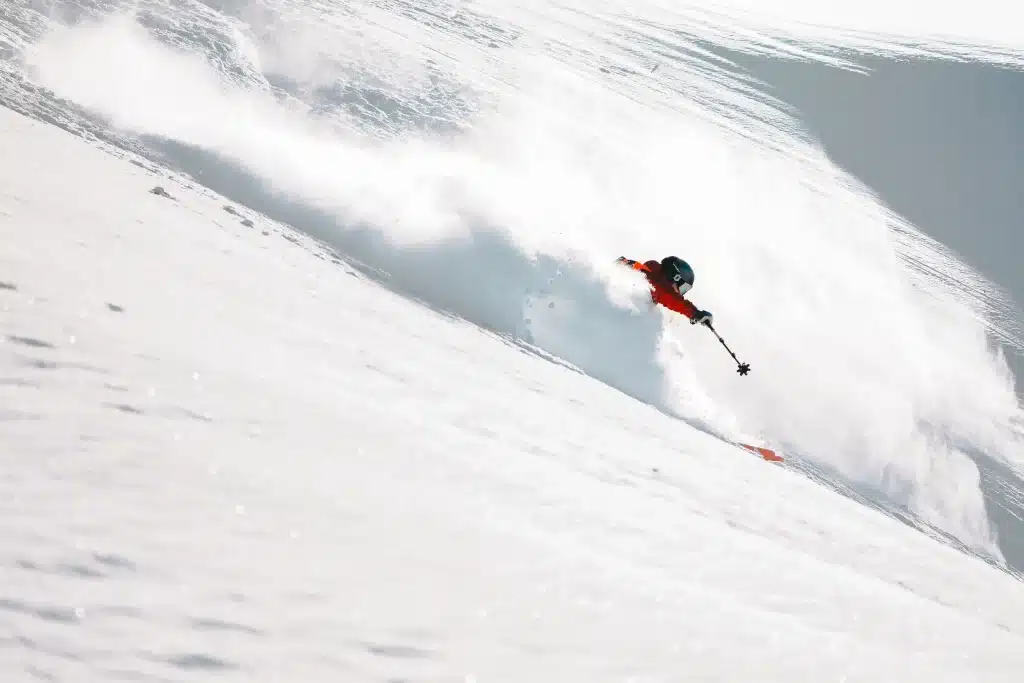
Freeride skiing emerged as a sport in the 1960s, when the French coined the term ‘Ski Extreme’. Expert French and Swiss riders, including Sylvain Saudan and Jean Marc Boivin, were freeriding pioneers who took alpine skiing to new heights.
This extreme style of riding became popular in America in the 80s, bringing a new aesthetic to the American ski experience rooted in adventure and entertainment. Filmmaker Greg Stump showcased the stars of American freeride skiing in the iconic ski film ‘Blizzard of Aaaah’s’, which further popularised the sport.
The inaugural freeride skiing competition, the World Extreme Ski Championships, took place in 1991, crowning Doug Coombs and Kim Reichhelm as the first big names in freeriding. Early competitions, including the World Extreme Ski Championships, Verbier Extreme and New Zealand’s World Heli Challenge, led to the creation of a global annual competitive circuit, the Freeride World Tour, which officially launched in 2008.
The success of the Freeride World Tour has led to the IOC announcing the inclusion of freeride skiing and snowboarding at the 2030 French Alps Winter Olympic Games, marking an incredibly exciting step for the sport as it takes its place on the world’s biggest stage.
Who are the Top Freeride Skiing Athletes?
Big names in freeride skiing include icons like Candide Thovex and Shane McConkey, who revolutionised the discipline with their creativity, innovation and fearless approach to steep terrain. Seth Morrison helped define modern big-mountain skiing with his powerful style, while Ingrid Backstrom became one of the most influential female freeriders through her groundbreaking film segments.
In competitive freeride skiing, athletes such as Arianna Tricomi, Kristofer Turdell and Reine Barkered have dominated the Freeride World Tour and continue to push the progression of the sport.
Is Freeride Skiing Dangerous? Understanding the Risks
Due to the extreme, unmarked natural terrain, freeride skiing carries more risk than piste skiing. To participate, you should be an expert skier who can read terrain incredibly well and is highly experienced in mountain safety. Freeride skiing risks can be minimised through terrain selection, carrying the correct safety equipment, skiing with others and interpreting weather conditions correctly.
If you are new to freeriding, it is always recommended to book a mountain guide or an off-piste ski instructor. This way you can build your technique and confidence skiing off-piste with the guidance of local experts.
With its Olympic debut set for 2030, freeride skiing is entering a new era and attracting more interest than ever before. Whether you’re hoping to watch the world’s best athletes or try off-piste skiing yourself, there’s never been a better time to discover freeriding!