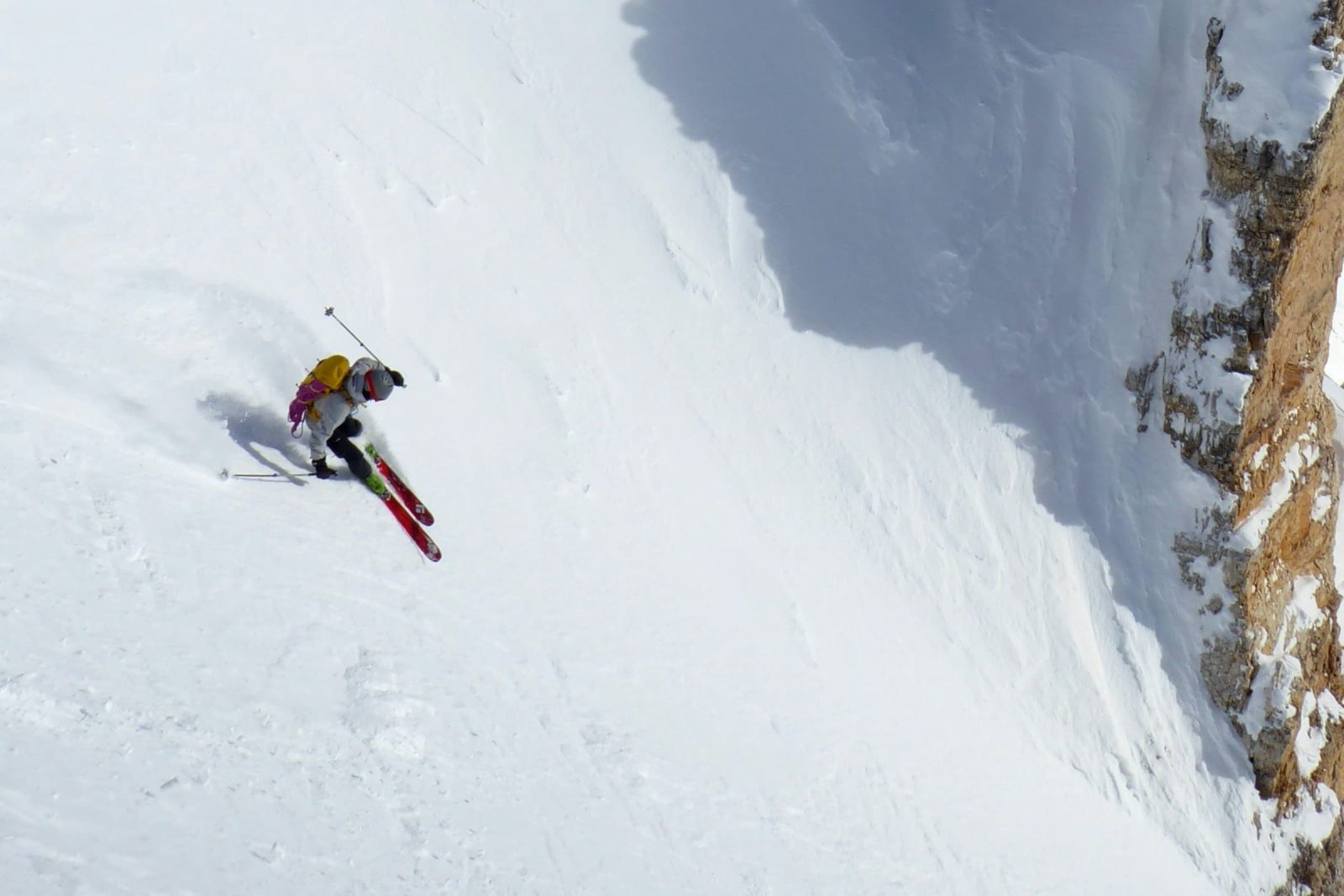
Alpine skiing has been an Olympic sport since 1936 and is one of the most popular winter sports worldwide. At an elite level, alpine skiing involves skiing down a set course around a series of turning gates at high speed.
Alpine skiing is divided into five distinct disciplines: downhill, slalom, giant slalom, super-G and combined. Each discipline tests a different balance of speed, technique, agility and control.
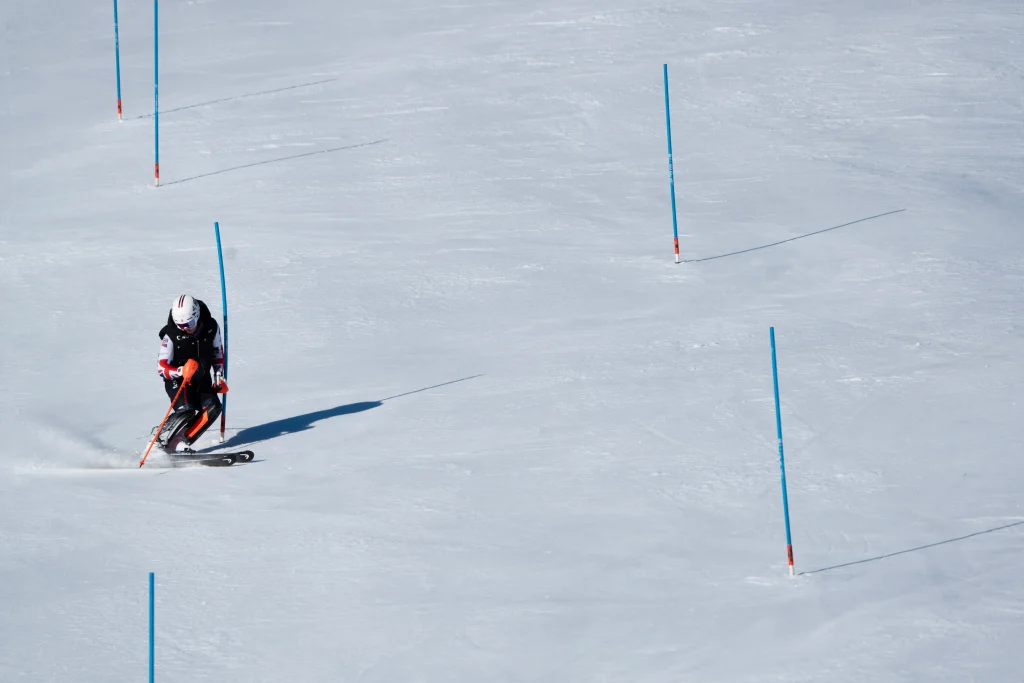
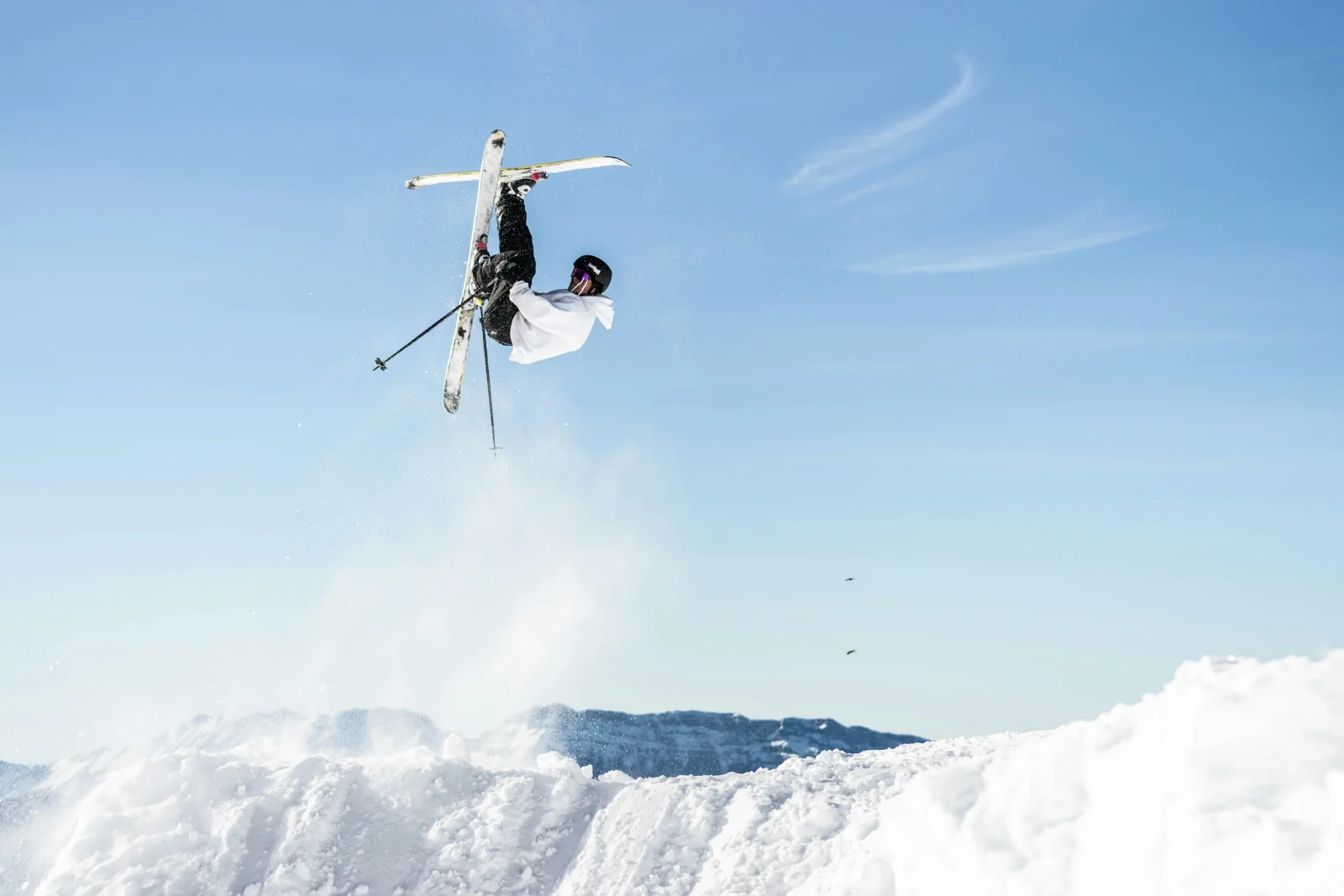
Unlike in freestyle skiing or mogul events, alpine skiing does not involve jumps, bumps, or other man-made snow features. Set courses are marked with flags and gates that skiers must pass through or around, depending on the event. Courses vary in length, steepness and gate spacing, and are designed to challenge athletes while maintaining strict safety standards.
Some of the most celebrated alpine skiers include Marcel Hirscher (Austria), Marco Odermatt (Switzerland), Mikaela Shiffrin (United States) and Lindsey Vonn (United States), who have numerous Olympic and World Cup medals to their names.
Alpine Skiing Events:
Downhill
Downhill is the fastest form of alpine skiing and was introduced to the Olympic programme as an individual event in St. Moritz 1948. In a downhill race, competitors ski down a predetermined, long, steep course that follows the natural terrain of the slope. Speeds in downhill events often range from 130-160 km/h! The vertical drop in downhill is typically between 800-1100m for men and 450-800m for women. Each competitor is given 2 training runs in the days preceding the race, then on race day they will ski the course once and the fastest time wins.
Slalom
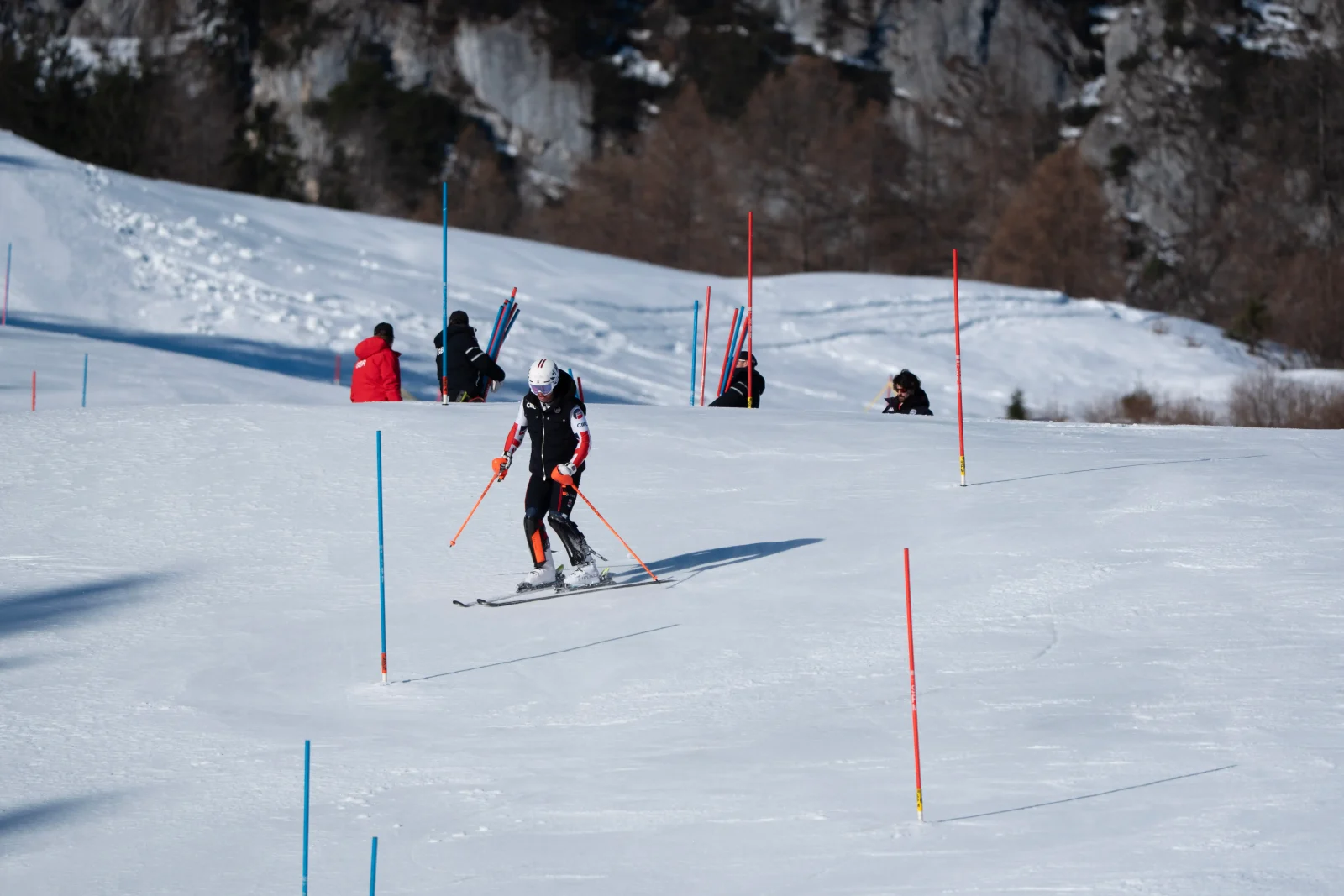
Slalom, also added to the Olympic programme as a standalone event in 1948, is one of the most technical alpine skiing events. It features a shorter course with a large number of tightly spaced gates that require precise, quick turns. Each gate has a minimum distance of 4m and a maximum of 6m. The vertical drop from start to finish is typically180-220m for men and 140-180m for women.
Slalom skiers have to ski two runs. Only the top 30 fastest skiers in the first run qualify to ski in the second run. The competitor with the lowest combined time across the two runs wins.
Giant Slalom
Giant slalom was introduced to the Winter Olympics in 1952 in Oslo, Norway and bridges the gap between technical skill and high speed. Gates are set wider apart than in slalom, with a maximum distance of 8m, allowing for longer turns. In giant slalom, the vertical drop is typically between 250-450m for men and 250-400m for women. Skiers get two runs down the slope and the winner is determined by the fastest combined time.
Super-G
First introduced to the Olympics in Calgary 1988 (the same Games where Eddie “The Eagle” Edwards gained fame in ski jumping), the super‑G, or super giant slalom, combines elements of the downhill and giant slalom events, requiring both high speed and precision. The vertical drop of the slope in super-G is between 400-650m for men and 400-600m for women. Skiers race a single run with no practice runs, only a course inspection beforehand, and the fastest time wins.
Combined
Combined was the first alpine skiing event to be introduced to the Garmisch‑Partenkirchen Winter Olympics in 1936. Traditionally, the alpine combined event at the Winter Olympics was an individual event, where one skier completed both a speed run (downhill or super‑G) and a slalom run, and the two times were combined to decide the winner.
However, for the 2026 Milano Cortina Winter Olympics, the format was changed. The individual combined event was replaced by a team combined event, in which two skiers of the same gender from each nation compete together – one tackles the downhill run and the other takes on the slalom run. The team with the fastest combined time wins.
Discover the alpine skiing schedule for the 2026 Winter Olympics and how to watch this year’s events in our ultimate guide to Milano Cortina 2026.
How is Alpine Skiing Scored?
Alpine skiing events are held in a time trial format, rather than skiers racing head-to-head at the same time, as seen in cross-country skiing and ski mountaineering events. Skiers aim to complete the course in the fastest possible time while correctly skiing all gates.
Missing a gate, skiing the wrong side of a flag, or falling and failing to finish results in disqualification. In multi-run events, times from each run are added together and the skier with the lowest combined time wins. Even fractions of a second can separate medal positions, making precision and consistency just as important as speed.
What Equipment is Needed for Competitive Alpine Skiing?
Competitive alpine skiing requires specialised equipment designed for speed, precision and safety. All equipment used in official World Cup and Olympic competitions must meet regulations set by the International Ski Federation (FIS).
Skis
Alpine racing skis vary by discipline and are built to strict size and radius requirements. Downhill and super-G skis are longer and more stable at high speeds. Giant slalom skis are slightly shorter, while slalom skis are the shortest, designed for high tempo, short turns. Competitive skiers will own multiple pairs of skis, each tuned for a specific event and turn shape.
Ski Boots
Racing boots are stiffer than recreational ski boots to provide maximum power transfer and control. A precise fit is critical and many competitive skiers use custom-moulded boots to improve responsiveness and comfort. Boot stiffness and setup may vary depending on the skier’s size, strength and discipline.
Bindings
Bindings must meet safety and performance standards and are designed to release during a fall while remaining secure during aggressive turns. Racing bindings are typically mounted on plates that improve leverage and edge control.
Poles
Alpine ski poles differ by event. Slalom poles include hand guards to protect skiers’ hands from gates, while sownhill and super-G poles are longer, curved and designed for aerodynamic efficiency.
Protective Gear
Helmets are mandatory in all competitive alpine skiing events. Racing helmets must meet approved safety certifications and often include chin guards for slalom events to protect against gate impacts. Additional protective equipment is commonly used, especially in technical events.
Race Suits
Competitive alpine skiers wear form-fitting race suits designed to reduce wind resistance and improve aerodynamics. These suits are worn over protective padding and are regulated to restrict the use of performance-enhancing materials.
How to Get into Alpine Skiing
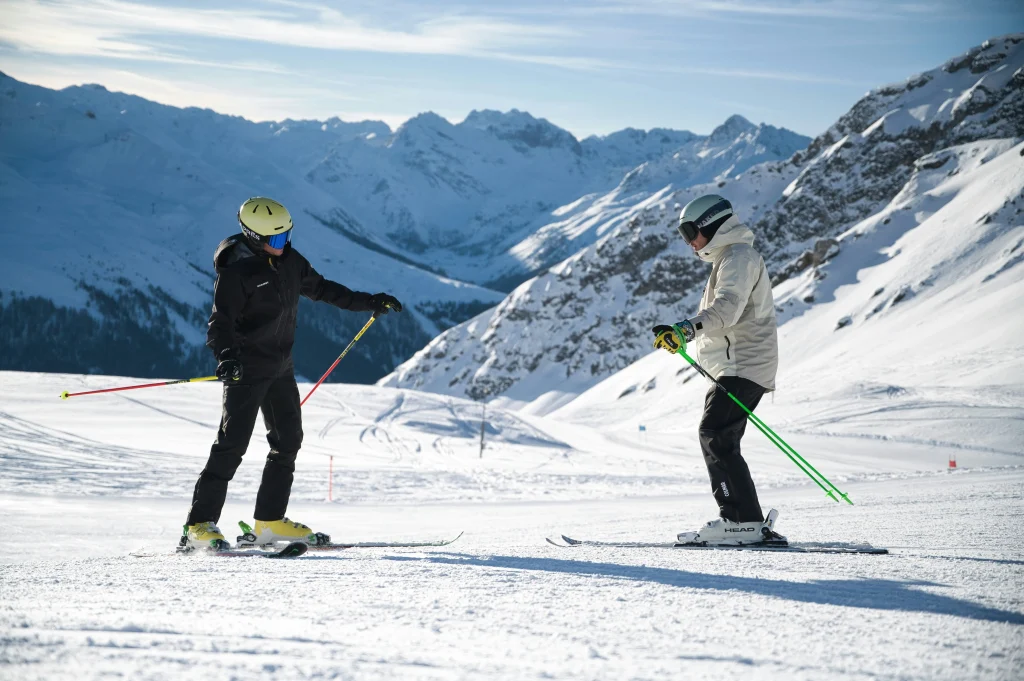
Getting into alpine skiing starts with building strong fundamentals and gradually progressing your skills on the mountain. For beginners, the best first step is booking ski lessons with a certified instructor. Professional instruction helps new skiers learn proper technique, understand mountain safety and develop confidence much faster than learning alone. On Maison Sport, you can even book a ski lesson with a former Olympian.
For those interested in competitive alpine skiing, many resorts, local ski clubs and dry ski centres offer junior programmes, race teams and development leagues. These programmes introduce structured training and race practice while emphasising technique and safety. Athletes typically progress through local and regional competitions before advancing to higher-level events.
Whether pursued recreationally or competitively, with the right instruction, alpine skiing is a sport that can be enjoyed at any age and skill level.