Adaptive skiing and snowboarding are making the mountains more accessible than ever. With specialist equipment, instructors trained in disability support and accessible ski resorts, people with disabilities can enjoy skiing and snowboarding just like anyone else.
Whether you’re curious about how adaptive skiing and snowboarding work, looking to book adaptive ski lessons in Europe, or simply want to learn more about accessible skiing, this complete guide, written in collaboration with leading adaptive snowsports charity Disability Snowsport UK (DSUK), covers everything you need to know.
Introduction to Adaptive Skiing and Snowboarding
Can people with disabilities ski or snowboard?
Yes – people with disabilities can absolutely ski or snowboard. Through adaptive snowsports, individuals with a wide range of physical, sensory and cognitive disabilities can enjoy skiing and snowboarding with specialist equipment and the help of expert instructors – opening up the mountains for everyone.
What is adaptive skiing and snowboarding?
Adaptive skiing and snowboarding are forms of snowsports designed to make the slopes accessible for people with disabilities. They involve using specialist equipment, such as sit-skis and outriggers, as well as expert guidance and support from trained adaptive ski instructors. Adaptive ski lessons can be tailored to the individual to ensure a safe, comfortable and enjoyable experience on the mountain.
Book adaptive skiing and snowboarding lessons with expert instructors on Maison Sport across top European resorts.
Who can participate in adaptive skiing or snowboarding lessons?
Anyone with a disability who wants to ski or snowboard can do so with the right support and equipment. Adaptive skiing and snowboarding lessons are tailored to each individual based on their experience level, goals and needs. Adaptive snowsports are accessible to people with a range of disabilities, including:
- Physical disabilities or limb differences
- Spinal cord injuries or wheelchair users
- Visual impairments or blindness
- Learning disabilities
- Neurodivergence
- Long-term health conditions or injuries
How do visually impaired skiers ski?
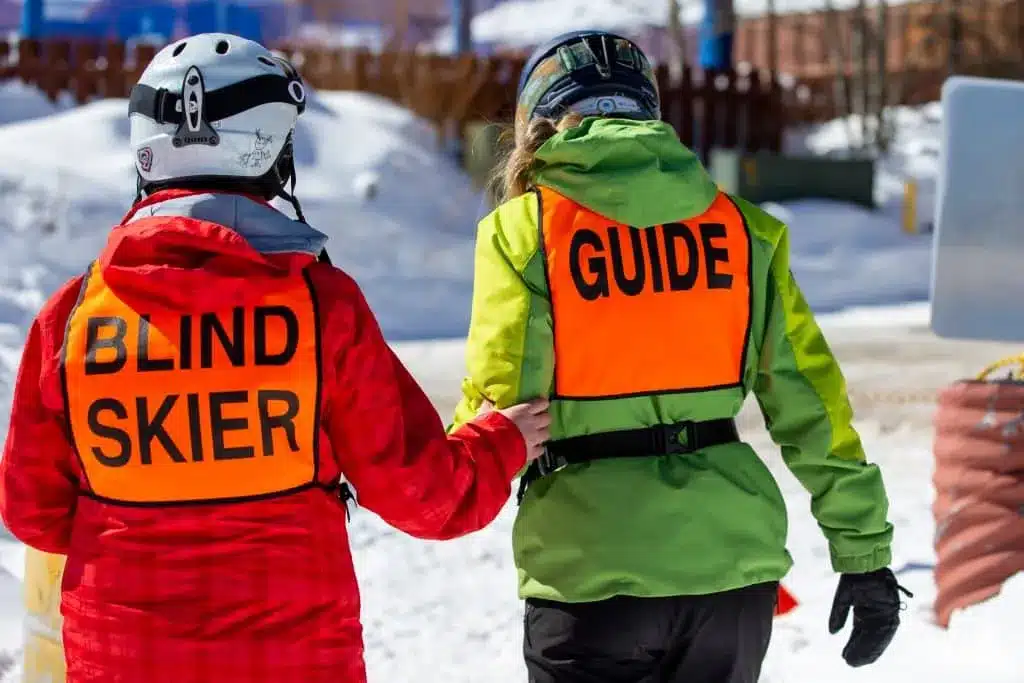
Visually impaired skiers often ski with a trained guide who helps them navigate the mountain safely. Trust and communication between the guide and skier are key. Guiding techniques vary depending on the level of visual impairment, but can include:
- Following a guide who skis slightly ahead and chooses a safe route
- Using clear verbal cues to indicate turns, speed changes or obstacles
- Receiving verbal instructions through wireless Bluetooth headsets
Book visually impaired ski lessons with expert instructors across top European resorts on Maison Sport.
How do wheelchair users ski?
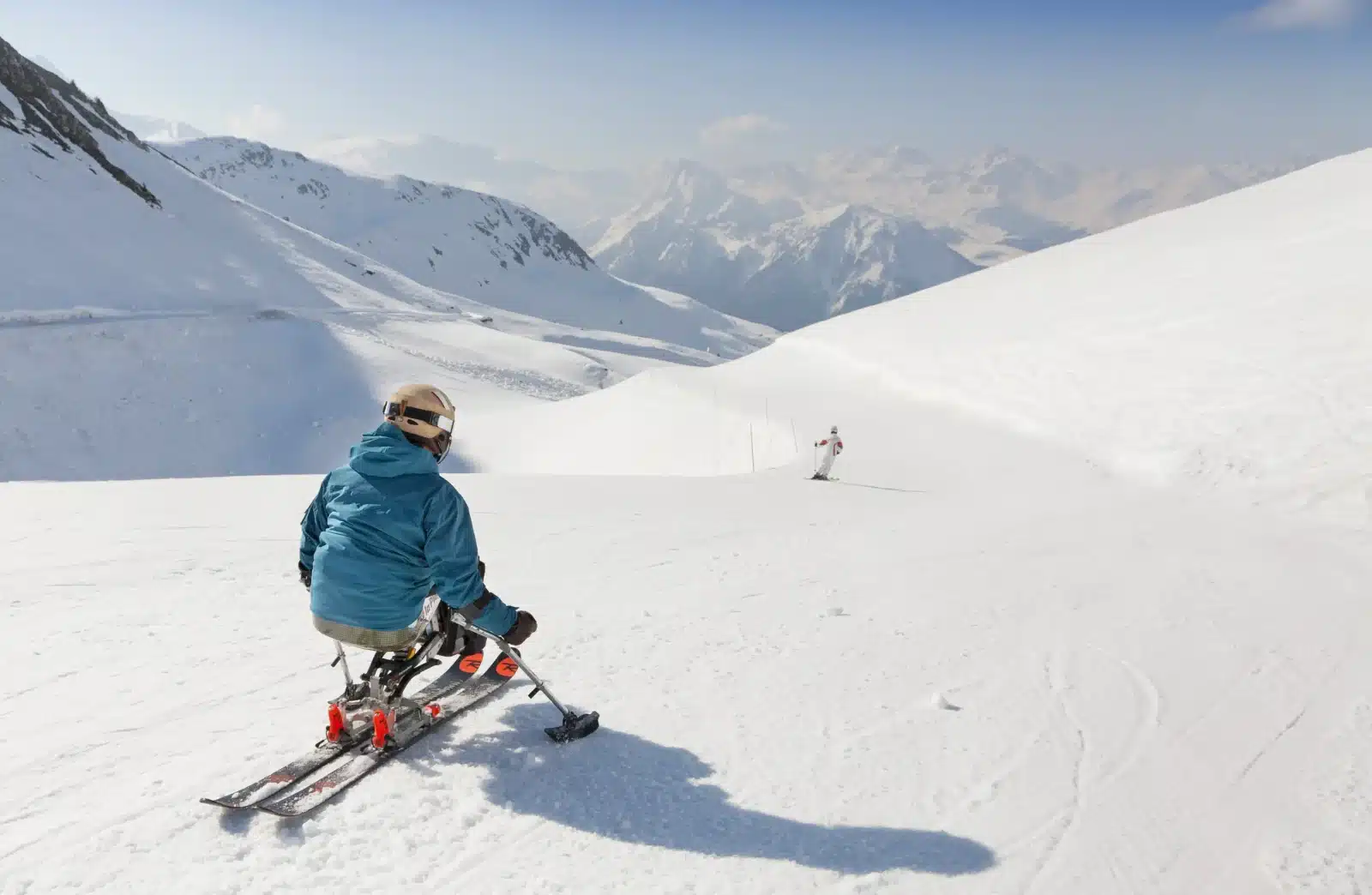
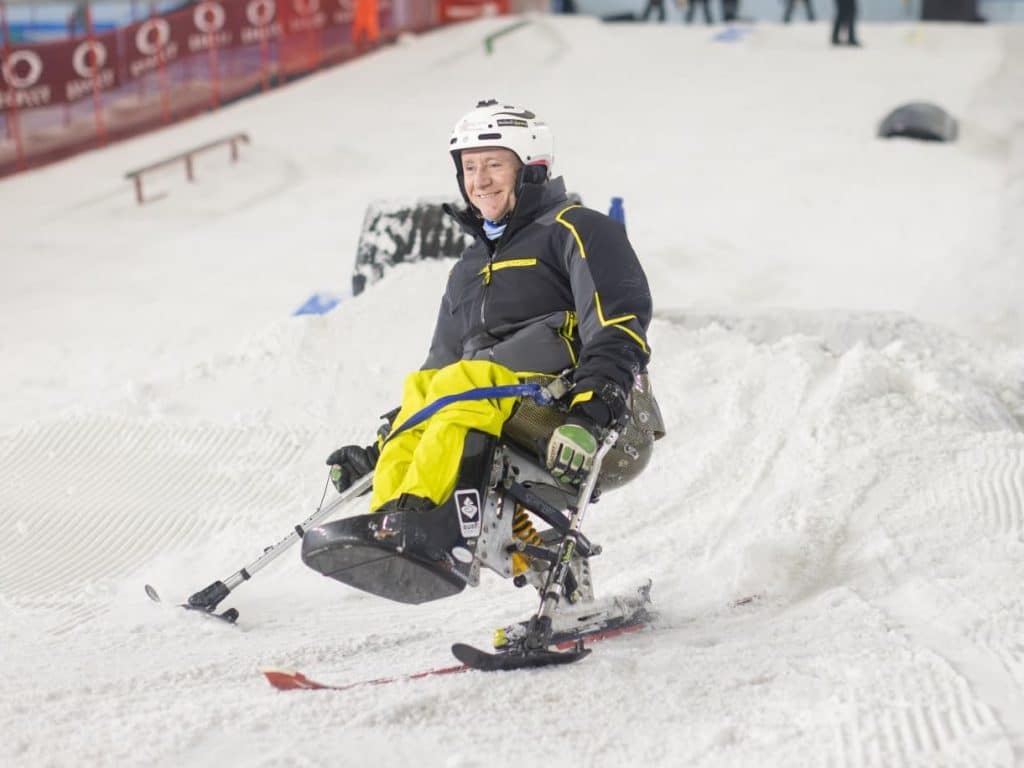
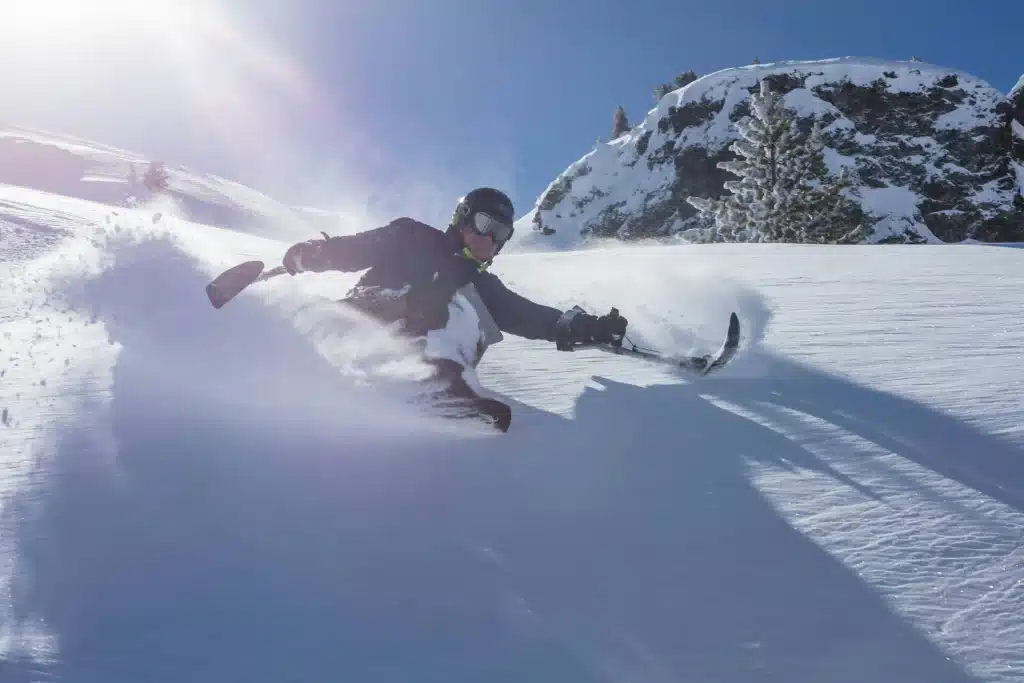
Wheelchair users can ski using sit-skis, which enable them to ski while seated. Sit-skis allow wheelchair users to carve turns, control speed and experience the slopes in much the same way as standing skiers.
The two most common sit-ski options are:
- Mono-ski: a moulded seat mounted on a single ski, offering greater manoeuvrability and performance
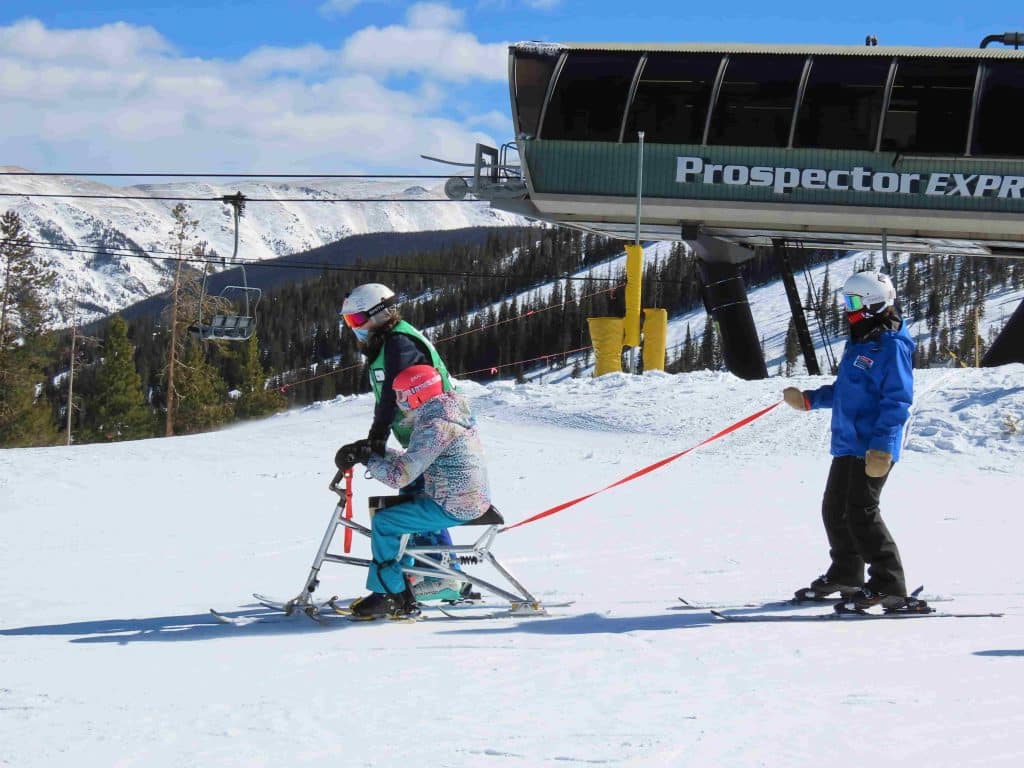
- Bi-ski: a seat mounted on two skis, providing more stability and support
Both sit-ski types can be used with tethers during lessons to help instructors manage speed and direction while the skier builds confidence.
Book sit-ski lessons with top-rated adaptive ski instructors across Europe on Maison Sport.
Adaptive Snowsports Equipment
What equipment is used for adaptive skiing?
Adaptive skiing equipment varies depending on the individual’s disability, goals and experience level.
Common adaptive skiing equipment includes:
- Sit-skis (mono-skis and bi-skis) – for seated skiing
- Outriggers – small skis attached to forearm crutches used for balance and turning
- Tethers – long straps attached to the seat used by instructors to assist with speed control while learning
- Bluetooth headsets – for visually impaired skiers to be guided by instructors
Should I use a mono-ski or a bi-ski?
A mono-ski is mounted on a single central ski, allowing for greater speed and carving, which can be ideal for experienced skiers seeking additional independence. Whereas a bi-ski seat is mounted on two skis, providing better stability. This is often best for beginners or those with limited core strength. If you are unsure which sit-ski is right for you, your instructor will be able to offer expert advice to help you decide.
What is three-track skiing?
Three-track skiing is an adaptive snowsport for individuals with a single-leg amputation, or for those with one strong, functional leg. In three-track skiing, there are 3 points of contact on the snow – typically one ski attached to the skier’s stronger leg and two outriggers (one for each arm) used for balance and support. Three-track skiing allows for significant speed and technical progression, and is used by many competitive adaptive skiers.
Book three-track skiing lessons with expert instructors in top European resorts on Maison Sport.
What equipment is used for adaptive snowboarding?
Adaptive snowboarding equipment is less widely available than adaptive skiing equipment, but continues to develop rapidly as the sport grows in popularity. Options can include:
- Sit-snowboards: custom boards that allow riders to snowboard while seated, offering a similar experience to sit-skiing
- Adaptive bindings and stabilisation systems: modified to support riders with limited mobility, limb differences or balance challenges
- Custom board modifications: boards adapted to accommodate specific physical requirements
Speak to a specialist adaptive snowboard instructor to find out which equipment and approach best suits your needs.
Accessibility & Facilities in European Ski Resorts for Adaptive Skiers
Are ski resorts in Europe accessible to people with disabilities?
Many ski resorts in Europe are becoming increasingly accessible for disabled skiers and snowboarders. Some resorts have fantastic facilities, including accessible hotels and transfer options, adaptive ski instructors, trained lift staff and accessible ski lifts, as well as discounted lift pass prices for disabled skiers. Before travelling, it’s important to check for the specific facilities that an individual requires to ensure their exact needs are met.
Some of the most accessible ski resorts for disabled people in Europe include former Winter Paralympic Games host Tignes, snow-sure Val Thorens and the bustling town of Chamonix, which was the first French mountain town to hold the Label Tourisme Handicap for accessible public spaces.
How do adaptive skiers use chairlifts?
Adaptive skiers use chairlifts in almost the same way as non-disabled skiers, but with a few adaptations depending on their equipment and mobility. Sit-skiers usually stay in their sit-ski, and lift staff slow the chairlift and help guide the chair underneath them. The sit-ski frame rests directly on the seat. At the top of the lift, staff can assist the skier to slide off onto the run. A tether can also be used to secure the sit-ski during time on the lift for added security.
Getting Started with Adaptive Ski Lessons
Are instructors specially trained or certified to teach adaptive snowsports?
Yes, instructors are both trained and certified to teach adaptive snowsports. Global certification programmes are available with different governing bodies and whilst techniques may vary, the overall pathway is the same. All adaptive ski and snowboarding instructors on Maison Sport are fully qualified to teach in their respective resorts.
UK instructors follow the British Association of Snowsport Instructors (BASI), and training covers a wide range of disciplines. DSUK also provides training for volunteers to become certified to assist with lessons (supervised by an instructor).
Is adaptive skiing safe?
Yes – when taught by trained instructors and supported with appropriate equipment, adaptive skiing is a safe and incredibly rewarding sporting activity for disabled people. Safety measures commonly used in adaptive ski lessons include:
- Tethers attached to sit-skis, giving instructors full control of speed and direction
- Specialist adaptive equipment that is fitted and checked before every session
- Fully tailored lesson plans based on individual ability, disability and goals
- Small instructor-to-student ratios designed for individual or small-group teaching
How much do adaptive ski lessons cost?
The cost of adaptive ski lessons varies depending on the resort, instructor and lesson length. Private adaptive ski lessons on Maison Sport typically cost between €50-€100 per hour. However, lesson prices can often fluctuate depending on the time of year as well as the time of day, with afternoon lessons typically cheaper than morning lessons.
Charitable organisations like DSUK offer subsidised adaptive skiing and snowboarding lessons at UK snow centres, making the sport more accessible to disabled people in the UK.
Where can I find adaptive ski lessons?
You can take part in adaptive ski lessons across many ski resorts around the world. Maison Sport offers adaptive ski and snowboarding lessons with expert instructors in several popular European resorts across France, Italy, Switzerland and Austria, including Courchevel, Chamonix, Val Thorens, Zermatt, Courmayeur and Kaprun.
If you are looking to try adaptive skiing or snowboarding in the UK, DSUK operate year-round lessons at eight locations: Tamworth, Manchester, Rossendale, Hemel Hempstead, Surrey, Glasgow and Edinburgh. In the winter, they also provide adaptive snowsport sessions at Cairngorm Mountain Resort in Scotland.
How can I book adaptive ski lessons?
If you’re interested in giving adaptive snowsports a go, the best place to start is by booking a lesson with a trained adaptive ski instructor. Whether you’re looking to book adaptive ski lessons in France, find a sit-ski instructor in Italy, or try adaptive snowboarding in Switzerland, Maison Sport makes it easy to find and book the right instructor for your needs. Exploring your options and speaking to a qualified instructor can help you choose the right approach, making your experience as smooth and enjoyable as possible.
On Maison Sport, you can browse instructor profiles and choose the instructor that best suits you. To book adaptive ski or snowboarding lessons, simply select your chosen resort, discipline and dates, choose your perfect instructor and book directly online. Flexible booking options allow you to choose your time slots and book as many or as few lessons as you like.
Supporting Adaptive Snowsports
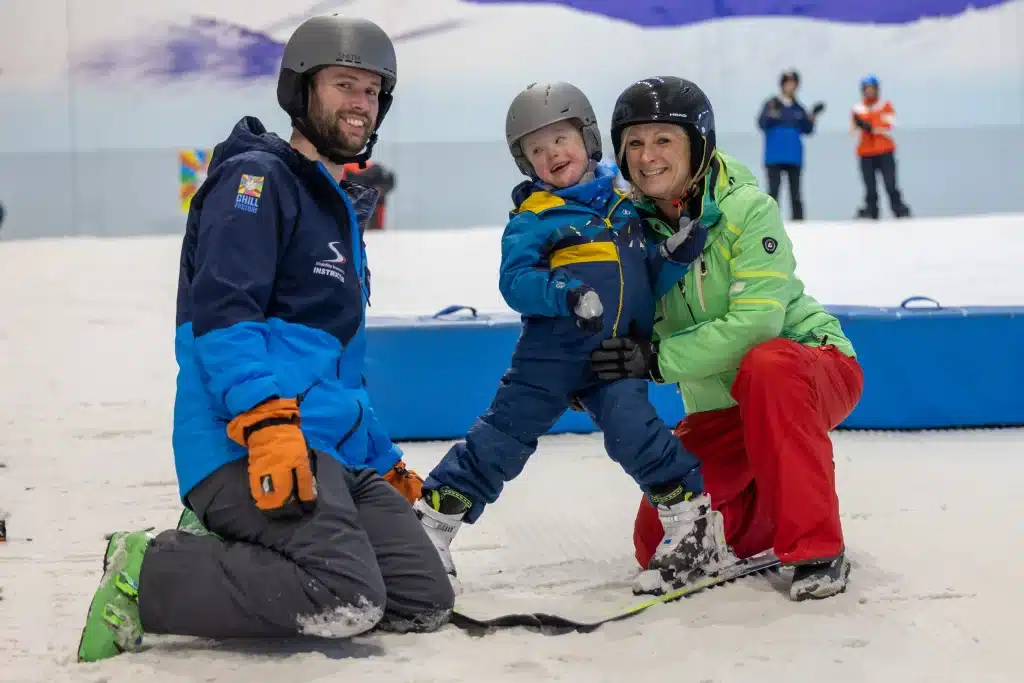
How can I support adaptive snowsports?
Charities like Disability Snowsport UK help thousands of people experience the joy of snowsports every year through lessons, training and community programmes. Snowsports can have a life-changing impact on disabled people and DSUK strives for a more inclusive snowsports community. We share this goal and encourage anyone who wants to support the development of adaptive snowsports to donate to DSUK or take part in their initiatives through their volunteer programmes. Learn more at www.disabilitysnowsport.org.uk.